
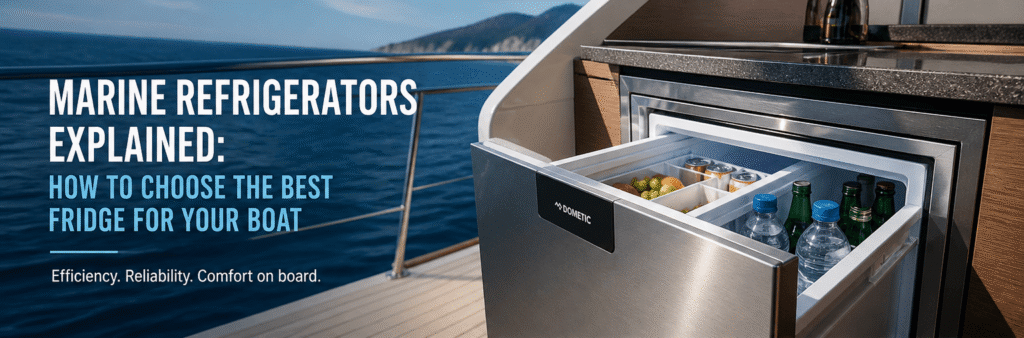
Why a Marine Refrigerator Is Different from a Regular Fridge
A marine refrigerator is not just a “small household fridge.” It is specifically designed to operate in harsh marine environments where vibration, humidity, salt exposure, and limited power availability are constant challenges.
Unlike standard domestic units, marine fridges are built to:
- Operate efficiently on 12V or 24V DC systems
- Resist corrosion from saltwater exposure
- Handle boat movement and vibration
- Minimize energy consumption, which is critical onboard
Using a household fridge on a boat may seem cheaper, but it often leads to battery drain, inefficiency, and premature failure.
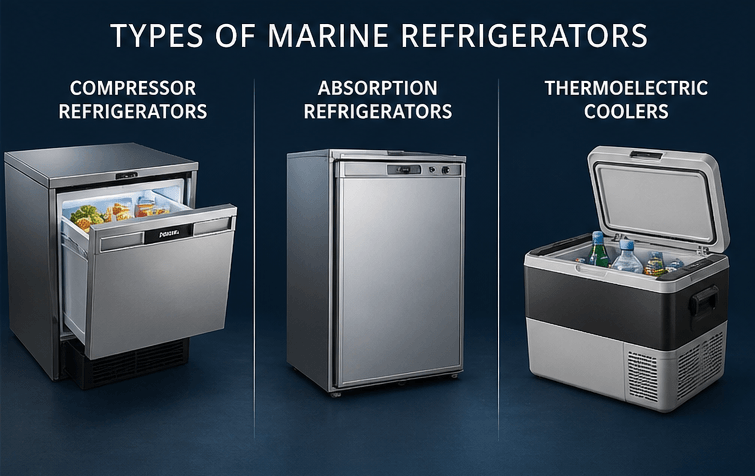
Main Types of Marine Refrigerators
Compressor Refrigerators (Most Common Choice)
Compressor fridges are the most popular option for modern boats.
How they work:
They use a compressor system similar to household fridges but optimized for DC power.
Advantages:
- Very energy efficient
- Strong cooling performance even in hot climates
- Works well in tropical environments (e.g. Cyprus, Mediterranean summers)
Disadvantages:
- Slightly more expensive
- Requires proper installation and ventilation
Best choice for most boat owners and long-term cruising.
Absorption Refrigerators (Gas/Electric)
Absorption fridges can run on electricity, gas, or both.
Advantages:
- Silent operation (no compressor noise)
- Flexible energy sources
Disadvantages:
- Less efficient in hot weather
- Higher energy consumption on electric mode
- Slower cooling performance
More common on older boats or boats with limited electrical systems.
Thermoelectric Coolers (Portable Option)
These are small cooling units often used as portable solutions.
Advantages:
- Cheap and lightweight
- Easy to move and install
Disadvantages:
- Limited cooling power
- Not suitable for long-term food storage
- Poor performance in high temperatures
Best for short trips or as backup cooling.
How to Choose the Best Marine Fridge for Your Boat
Choosing the right marine fridge requires evaluating several practical factors that directly affect performance, energy consumption, and onboard usability.
1. Power Consumption and Energy Efficiency
Energy use is the most critical aspect on a boat.
- Prefer 12V or 24V DC compressor models
- Check daily energy consumption (Ah/day rating)
- Avoid systems with constant high power draw
A highly efficient fridge helps preserve battery life, especially during anchoring or long periods without shore power.
2. Type of Cooling System
Marine refrigerators use different technologies, each with specific pros and cons.
- Compressor systems: most efficient and reliable, suitable for all conditions
- Absorption systems: quieter but less efficient and sensitive to heat
- Thermoelectric coolers: suitable only for short-term or light use
Compressor models are generally the most suitable choice for modern boating.
3. Size and Storage Capacity
Correct sizing is essential for both practicality and energy efficiency.
- Small boats: 20–40 liters
- Medium boats: 40–80 liters
- Cruising yachts: 80–120+ liters
Oversized units increase energy consumption, while undersized ones reduce usability during longer trips.
4. Sailing Area and Climate Conditions
Environmental conditions strongly influence performance.
- Hot climates (Mediterranean, Cyprus): require high-efficiency compressor systems and strong insulation
- Moderate climates: standard compressor units are usually sufficient
Higher ambient temperatures demand more efficient cooling systems.
5. Installation Type and Available Space
Proper integration into the boat layout is essential.
- Built-in units: most efficient and stable solution
- Drawer-style fridges: convenient access, higher cost
- Portable units: only for temporary or secondary use
Correct installation improves both efficiency and durability.
6. Ventilation and System Integration
Poor installation can significantly reduce performance.
- Ensure adequate airflow around the compressor
- Avoid enclosed or poorly ventilated spaces
- Match fridge consumption with battery capacity and charging system
Ventilation is a key factor often underestimated during installation.
7. Noise and Comfort Onboard
Comfort becomes important, especially on smaller vessels.
- Prefer low-noise compressor systems
- Consider vibration-dampened mounting solutions
- Avoid noisy or outdated systems in sleeping areas
Best Use Case Scenarios
Long-Term Sailing
High-efficiency compressor systems combined with a large battery bank and/or solar support are recommended to ensure consistent cooling over extended periods at sea.
Weekend Boating
A small compressor fridge (30–50L) is usually sufficient for short trips, offering enough space for essentials while keeping energy consumption low.
Coastal Cruising (e.g. Cyprus routes)
Medium-sized compressor systems with efficient insulation are ideal for multi-day coastal navigation, balancing storage capacity and battery usage.
FAQ
What is the best type of fridge for a boat?
The best option is usually a DC compressor marine refrigerator, due to its efficiency and reliability in marine environments.
Can I use a normal fridge on a boat?
It is technically possible, but not recommended because household fridges consume too much power and are not designed for vibration or marine conditions.
How much power does a marine fridge use?
On average, small units use 0.5–1.5 Ah per hour, while larger units can use up to 3 Ah per hour depending on conditions.
Do marine fridges work in hot climates like Cyprus?
Yes, but only high-efficiency compressor models with proper insulation and ventilation perform reliably in hot environments.
How long do marine refrigerators last?
A quality marine fridge can last between 8 and 15 years with proper maintenance and correct installation.
Extra
If you need support or advice, don’t hesitate to contact us through our contact page: [insert link]. Our team will be happy to help you with any questions or requests. Find out what we consider the best supplier in the industry, carefully selected for reliability and quality. If you are looking for a trusted partner, we highly recommend exploring their services.